English is the authoritative source. Machine translation changes this website page only; it is not a professionally reviewed translation and does not translate the novel. Confirm safeguarding, legal, health and emergency information with an official service in your country.
Freedom Charity combines specialist safeguarding training, the story of Cut Flowers and established accompanying lesson resources. The current digital Education Hub is a separate resource.
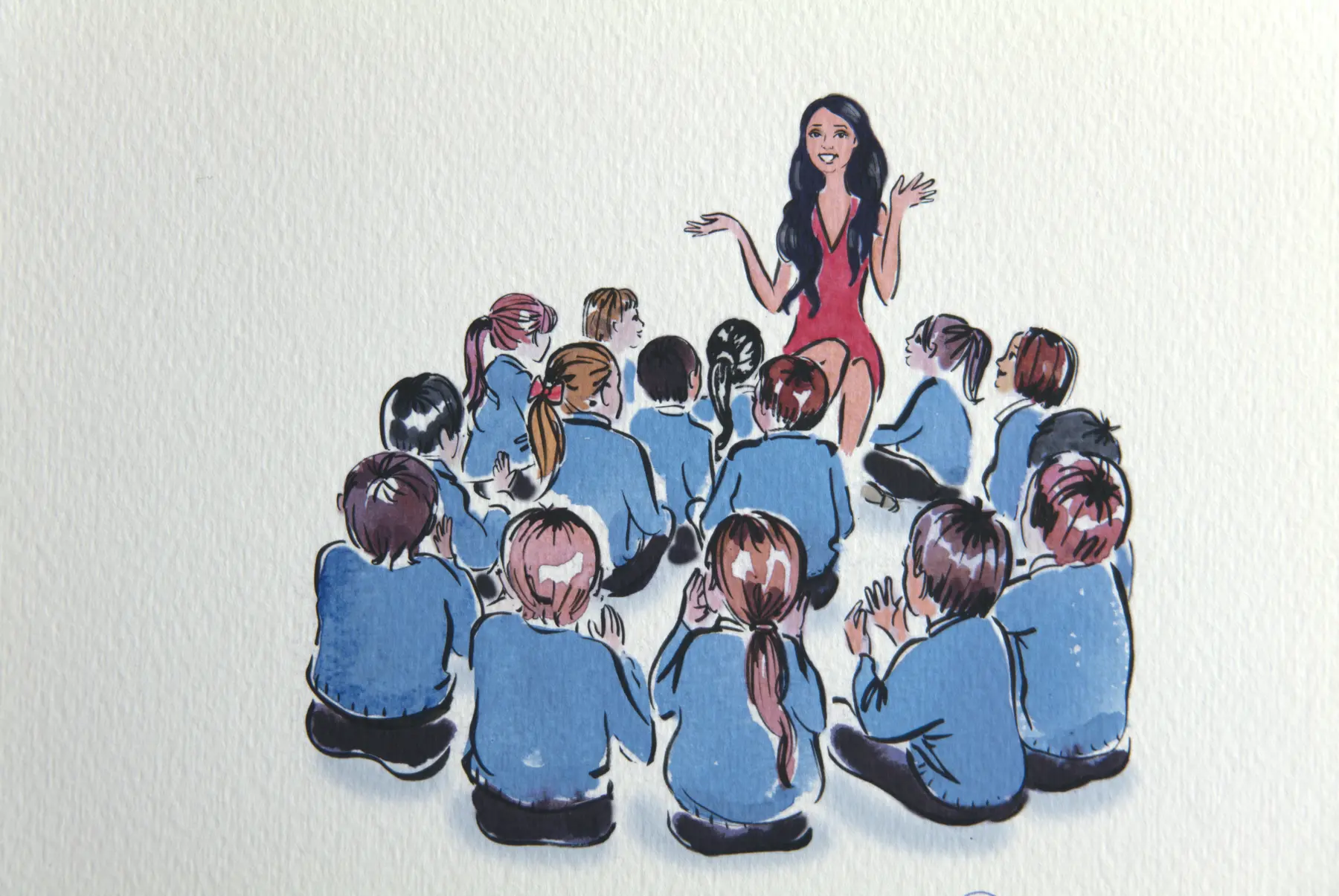
Education in action — an original illustration from Cut Flowers by Aneeta Prem MBE, illustrated by Robyn Neild.01
Before teaching: DSL preparation
The designated safeguarding lead should review the lesson, confirm local referral routes and brief staff on likely disclosures. Decide how pupils can leave the lesson or ask for private help. Do not invite personal disclosure and do not notify a family where doing so could increase risk.
02
Lesson 1: story and safety
Introduce Katie and Sophia through fictional distance. Establish ground rules, the right to pass and private routes for support. Explore friendship, secrecy and the difference between keeping a surprise and carrying a dangerous secret.
03
Lesson 2: rights, law and FGM/C
Define FGM/C accurately and without graphic detail. Explain bodily autonomy, that FGM has no health benefit, is not required by religion and is illegal. Use short questions to challenge myths without asking pupils to speak for a culture or community.
04
Lesson 3: recognising concern
Use the novel to discuss possible warning signs such as talk of a special procedure, a ceremony or an extended trip. Make clear that one sign does not prove FGM. A pupil’s task is to tell a trusted adult, not to investigate.
05
Lesson 4: help-seeking and action
Practise safe words a young person can use: ‘Something I heard has worried me. I need your help.’ End with the school’s safeguarding lead, private reporting route, local emergency services and recognised country-based support. In the UK, call 999 in immediate danger.
06
Mandatory reporting
Teachers in England and Wales must personally report to the police a known case of FGM in an under-18 identified through disclosure or visual evidence. Suspected or at-risk cases follow ordinary safeguarding procedures. Teachers must never examine a pupil.
The accompanying Freedom Charity lesson resources for Key Stages 3 and 4 carry the PSHE Association Quality Mark. The Quality Mark applies to the teaching resources, not to the novel itself.
Freedom Charity delivers pupil presentations, lessons, workshops and whole-school assemblies about dishonour abuse, including forced marriage, FGM and virginity testing. Sessions are designed to support prevention, safe discussion and clear routes to safeguarding help.
Freedom Charity provides practical training for teachers, designated safeguarding leads and other professionals. Sessions cover warning signs, safe responses to disclosures, mandatory reporting and wider safeguarding routes.
Buy a 34-book class pack of Cut Flowers directly from Freedom Charity. Contact the charity for other quantities, invoices and accompanying lesson resources.
 CUT FLOWERS